Why Sora AI Matters Right Now
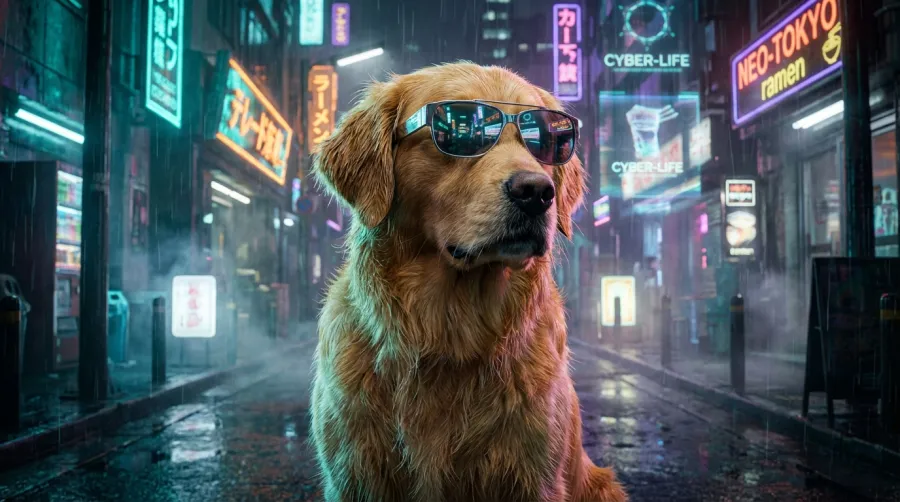
Sora AI exploded onto the scene as OpenAI's bold entry into AI video generation. The first demos showed golden retrievers in neon cityscapes and surreal dreamscapes that felt ripped from a Hollywood render farm.
Every creator with an internet connection wanted access. The promise was irresistible: type a sentence, get a cinematic clip. Sora AI turned text prompts into moving images that looked impossibly real.
But the excitement masked deeper questions about reliability and cost. Reddit communities lit up with both awe and frustration within days of the public rollout. The gap between demo reels and daily use became obvious fast.
Here is the thing. Sora AI landed at a moment when the AI video market is more crowded than ever. Google, Runway, Pika, and Kling are all racing toward the same finish line. That context changes everything about how we evaluate sora ai today.
- OpenAI released sora ai as a text-to-video model with cinematic ambitions.
- Early clips went viral, racking up millions of views across social platforms.
- User enthusiasm dropped sharply after the first week of hands-on testing.
- Competitors launched rival tools while sora ai users reported growing limitations.
The Sora AI Timeline So Far
OpenAI first previewed sora ai in early 2024 with tightly controlled demos. Public access came later, and the response was immediate. Creators flooded social media with clips of impossible scenarios generated entirely from text.
The honeymoon phase lasted roughly seven days for most users. After that initial burst, people started testing the edges of what sora ai could actually do. The patterns and limits became clear quickly.
Sora 1 was then shut down earlier than expected, catching many users off guard. One frustrated Reddit user wrote: "the message clearly said it would be taken down AFTER 3/13, but they pulled it ON 3/13." That sudden cutoff eroded trust with early adopters.
| Event |
Impact on Sora AI Users |
Community Reaction |
| Initial demo release |
Massive hype and sign-up demand |
Universal excitement |
| Public access rollout |
Real usage exposed limitations |
Mixed reviews within days |
| Sora 1 shutdown |
Users lost access and data export failed |
Widespread frustration and anger |
| Sora 2 launch |
Better consistency but missing features |
Cautious optimism at best |
How Sora AI Actually Works Under the Hood
Sora AI is a diffusion-based model that generates video frame by frame from text descriptions. It does not simulate real physics. Instead, it predicts what pixels should look like based on training data from millions of video clips.
This pixel-prediction approach is why sora ai sometimes produces stunning results and sometimes creates nightmares. The model guesses what comes next visually. When the guess is wrong, legs dissolve into sidewalks and arms merge with clothing.
The compute requirements are enormous. Each second of sora ai output demands GPU clusters that cost significantly more than running text models like GPT-4. That hardware reality sets a hard floor on pricing for every user.
"The AI is not actually simulating physics. It is predicting pixels, and when it guesses wrong, the results break reality in unsettling ways."
What Sora AI Gets Right
When sora ai works, the results are genuinely impressive. Lighting, texture, and color grading can rival professional footage. The model handles cinematic compositions with a confidence that earlier AI tools could not match.
Sora AI excels at short, stylized clips where strict physical accuracy is less important. Abstract art, dream sequences, and surreal landscapes play to the model's strengths. These genres forgive the occasional physics violation.
- Lighting and shadow rendering in sora ai output often looks photorealistic.
- Color grading across frames maintains a consistent cinematic tone.
- Stylized and abstract content hides the model's physics weaknesses effectively.
- Short clips under five seconds tend to maintain better visual coherence.
The Sora AI Shutdown That Shook Users
The biggest controversy around sora ai in recent months was the abrupt shutdown of Sora 1. OpenAI pulled the plug earlier than announced, leaving creators scrambling to save their work. The data export tool was unreliable at best.
One Reddit user summed it up bluntly: "The data export doesn't do anything. It is NOT your raw files." For creators who had invested hours generating content with sora ai, this was a betrayal. Their work was effectively locked behind a closed door.
Sora 2 arrived as the replacement, but the transition was not smooth. The new version improved sequence consistency for longer clips. However, it dropped image generation entirely, confusing users who relied on that feature.
The community response was sharp. As one user noted: "Sora 1 is the best image platform I have found, and it's insane to me that a year after its launch, it's going to be gone." That sentiment captures the frustration of watching a tool evolve away from what made it useful.
| Sora 1 Feature |
Sora 2 Status |
User Sentiment |
| Image generation |
Removed entirely |
Major disappointment |
| Free unlimited generations |
Capped at 10 free generations |
Frustration over paywall |
| Flexible content guidelines |
Stricter filtering applied |
Creative freedom feels limited |
| Data export access |
Unreliable during transition |
Trust broken with early adopters |
Content Restrictions Killing Creativity in Sora AI
Safety filters have become a lightning rod issue for sora ai users. The restrictions tightened significantly between versions. Users report being blocked for prompts that are clearly fantastical and harmless.
One creator tried generating a man skydiving off a dragon and got flagged immediately. Another user stated flatly: "Content restrictions are so tight that you basically can't generate anything anymore." The filter logic remains opaque.
Everyone agrees that preventing deepfakes and harmful content matters. But the current implementation of sora ai's filters is seen as overcorrecting. When a tool blocks creative expression at this scale, it pushes users toward competitors with lighter restrictions.
"Sometimes I will be filtered for seemingly no reason whatsoever by sora ai, even for prompts that are clearly fantastical and completely harmless."
When Sora AI Breaks the Laws of Physics
The most shared sora ai failures involve objects defying basic physics. Legs dissolve into pavement mid-stride. A drop of water snaps to a character's nose like a magnet. Shirts merge with human arms in ways that haunt the viewer.
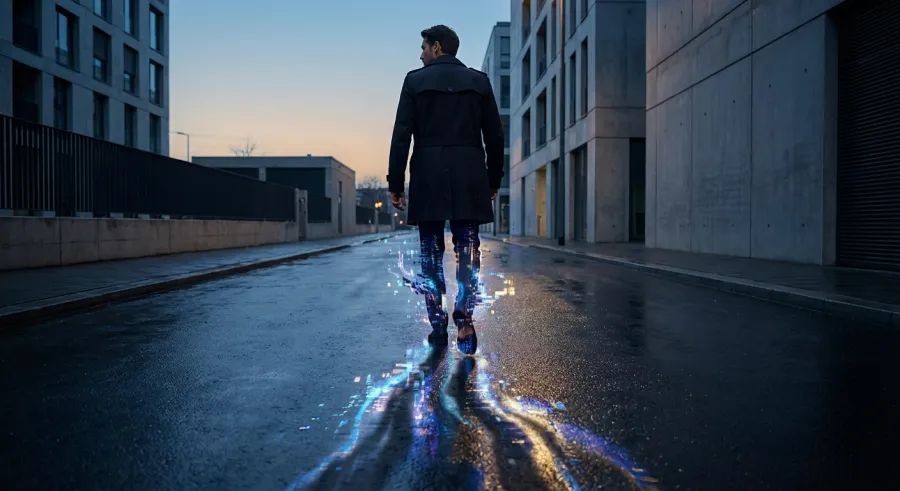
These temporal inconsistencies are the single biggest technical barrier for sora ai adoption in professional workflows. You cannot use a clip where the lead actor's face shifts between frames for a commercial or a film.
Character consistency across multiple shots is another weak spot. If you need the same person to look identical in scene one and scene five, sora ai currently struggles without heavy manual workarounds.
- Objects pass through each other regularly in sora ai generations.
- Character faces shift subtly between frames, losing visual identity.
- Gravity behaves like a suggestion rather than a rule inside the model.
- Background elements warp or vanish entirely when the virtual camera moves.
Why Sora AI Physics Glitches Persist
The core issue is architectural. Sora AI predicts visual patterns rather than simulating actual physical interactions. Teaching a neural network that cloth cannot fuse with skin is fundamentally different from teaching it to mimic how cloth looks on skin.
Competitors face the same challenge, but some have made faster progress. Runway and Kling both offer better object persistence in certain scenarios. The bar keeps rising, and sora ai must clear it to stay relevant.
Fixing these glitches requires both better training data and new architectural approaches. OpenAI likely knows this, and Sora 2 shows incremental progress. But incremental is not enough when rivals are sprinting.
"These errors remind us that sora ai is not actually simulating a world. It is hallucinating one frame at a time, and sometimes the hallucination breaks."
The Cost Problem Facing Sora AI
Every frame of sora ai video demands expensive GPU clusters running at full capacity. The compute cost per second of generated video dwarfs what text models require. This economic reality shapes everything about the product's future.
Free users now get only ten generations on the Sora app. That is a sharp cut from the early days of generous access. For businesses evaluating sora ai as a production tool, the cost-per-clip math often does not add up against stock footage.
API pricing is the critical variable for developer adoption. If a five-second clip costs ten dollars to produce, most small teams will look elsewhere. Sora AI needs dramatic cost optimization to unlock the mass market it was designed for.
| Cost Factor |
Current Impact on Sora AI |
Risk Level |
| GPU compute per second |
Orders of magnitude above text generation |
High, limits consumer pricing |
| API latency |
Minutes per short clip generation |
Medium, kills fast iteration cycles |
| Storage and bandwidth |
High-resolution video demands heavy infrastructure |
Medium, increases operational overhead |
| Free tier reduction |
Only 10 free generations per user now |
High, shrinks the user funnel |
How Sora AI Pricing Compares to Competitors
The competitive landscape puts direct pressure on sora ai pricing. Runway, Pika, and Kling all offer tiered plans that undercut OpenAI on volume. Google's Veo 3 benefits from vertically integrated infrastructure that keeps costs lower.
For developers exploring multiple AI video engines, managing costs across providers becomes its own challenge. Platforms that aggregate access to different models through a single API can simplify billing and reduce overhead significantly.
You can manage your API billing across multiple AI providers from one dashboard. This approach helps teams compare sora ai costs against alternatives without juggling separate accounts and payment systems.
Sora AI Alternatives That Are Gaining Ground
The AI video generation market is fragmenting fast. Sora AI holds the most famous brand name, but competitors are outpacing it in specific areas. Reddit users increasingly recommend alternatives for different creative needs.
Google Veo 3 has emerged as a serious contender. Users praise its cinematic quality and, most importantly, its native audio synchronization. One user noted: "Veo 3's audio synchronization is the real standout across all three major tools." That feature alone shifts the equation for content creators.
Seed Dance has impressed users with motion quality that rivals sora ai at its best. The Reddit consensus is blunt: "The only one I've seen to truly rival sora is Seed Dance." For creators prioritizing natural human movement, this matters.
Kling 2.5 carved out a niche with directorial controls that sora ai lacks. It offers fifteen-plus camera perspectives and start-to-end frame support. That level of creative control appeals to filmmakers who need precision, not just spectacle.
- Google Veo 3 leads in audio sync and cinematic consistency for commercial work.
- Seed Dance matches sora ai on motion quality with fewer glitches reported.
- Kling 2.5 offers superior camera control and directorial precision tools.
- Runway remains strong for quick iteration and integration with editing pipelines.
Choosing the Right Sora AI Alternative
The best tool depends entirely on the job. No single AI video generator dominates every category. Sora AI still produces some of the most visually striking raw output, but that advantage shrinks as competitors improve their rendering engines.
For commercial content requiring audio sync, Veo 3 currently leads. For stylized creative projects, sora ai and Kling both perform well. For developers building apps that need reliable API access across multiple models, flexibility matters more than loyalty to one platform.
You can explore all available AI models including video generators through a unified interface. Testing multiple engines side by side is the fastest way to find the right fit for your specific project requirements.
The Ethics Debate Around Sora AI
The ability to generate hyper-realistic video from text creates serious ethical questions that sora ai cannot avoid. Deepfake potential is the most obvious concern, and governments worldwide are paying attention to how these tools evolve.
Copyright infringement is an active legal battleground. The training data behind sora ai includes copyrighted works from artists and filmmakers. Those creators are pushing back hard, demanding compensation or at minimum an opt-out mechanism for their content.
OpenAI's approach has been described by critics as deliberately aggressive. One widely shared quote from the community captures the mood: "Their strategy is to release products that immediately infringe copyright and likeness laws but will be allowed because everyone wants it."
- Deepfakes generated by sora ai could influence elections and shape public opinion.
- Artists are demanding opt-out rights from AI training datasets used by tools like sora ai.
- Watermarking AI-generated content is a top priority for safety advocates and regulators.
- The legal definition of fair use is being tested in courtrooms right now.
Building Trust in Sora AI's Future
Transparency about data sources is the minimum requirement for sora ai to win back skeptics. The current lack of clarity about what the model was trained on fuels the backlash. OpenAI needs to publish clear documentation about training data practices.
Content labeling is a practical step forward. Clearly marking AI-generated video helps viewers make informed judgments. Sora AI watermarks already exist, though users have found ways around them, which highlights the ongoing cat-and-mouse nature of the problem.
The broader conversation about AI and creativity is not slowing down. As sora ai grows more capable, the pressure from artists, regulators, and the public will intensify. How OpenAI responds in the next year will define the platform's long-term reputation.
"Trust is built through accountability and clear guardrails that ordinary people can understand. If sora ai is perceived as a tool for deception, regulation will crush its potential."
Getting Real Results from Sora AI Today
If you have access to sora ai right now, the smartest strategy is working with its strengths instead of fighting its weaknesses. Stylized and abstract content hides physics glitches. Short clips under five seconds maintain better coherence than longer sequences.
The hybrid editing approach is producing the best professional results. Generate raw material with sora ai, then use traditional editing tools to mask errors and polish the final cut. This combination leverages AI speed while keeping human quality control in the loop.
Prompting style matters more than most users realize. Shorter, more evocative prompts often outperform detailed technical descriptions. The model has its own creative tendencies, and learning those tendencies takes deliberate experimentation over time.
| Strategy |
Best Use Case |
Why It Works with Sora AI |
| Hybrid editing workflow |
Professional video production |
Human skill masks AI imperfections |
| Stylized content focus |
Creative and artistic projects |
Physics errors read as intentional style |
| Short evocative prompts |
Fast creative iteration |
Gives the model freedom to interpret well |
| Community prompt sharing |
Learning the model's behavior |
Collective testing accelerates discovery |
Practical Tips for Sora AI Prompting
Start with the mood, not the mechanics. Describing an emotional atmosphere gives sora ai more room to produce coherent visuals than listing exact camera angles and object positions.
Avoid prompts that require precise physical interactions between objects. Sora AI handles atmosphere and lighting far better than it handles a hand picking up a glass or a ball bouncing off a wall. Play to those strengths.
Iterate quickly. Generate multiple variations of the same concept and pick the best output rather than trying to get one perfect clip. The lottery-style nature of sora ai rewards volume over precision at this stage.
Connect with other sora ai users through Reddit and Discord communities. Shared prompt libraries and failure galleries are the fastest way to learn what works. The collective knowledge of thousands of testers is more valuable than any official tutorial.
Where Sora AI Goes from Here
The trajectory of sora ai mirrors the entire AI industry. A massive hype cycle, a harsh reality check, and then the long grind of genuine improvement. We are firmly in the grinding phase now, and that is where the real progress happens.
Sora 2 shows that OpenAI is iterating, but the pace needs to accelerate. Competitors are not waiting politely. Google, Runway, and a dozen startups are all shipping improvements monthly while sora ai users wait for the next major update.
The most likely future is not one dominant tool but a fragmented market where different models excel at different tasks. One engine might lead on cinematic lighting while another wins on human motion. Smart creators will use multiple tools.
For developers building the next generation of creative applications, staying flexible across AI providers is essential. You can read the full API documentation to see how a unified interface makes it simple to switch between video engines as the market evolves.
- Sora AI must fix physics consistency and reduce generation costs to survive long-term.
- The competitive landscape will likely fragment into specialized tools for different creative needs.
- Developers who build on flexible multi-model APIs will adapt fastest as winners emerge.
- The next twelve months will determine whether sora ai becomes a production standard or a footnote.
The road ahead for sora ai is uncertain but undeniably important. Whether it becomes the Photoshop of video or gets overtaken by hungrier competitors, the technology it helped popularize is here to stay. Every frame generated today brings us closer to a future where video creation is as accessible as typing a sentence.
Stay informed as this space evolves rapidly. You can follow the latest AI industry updates to track how sora ai and its rivals develop. The best time to understand this market was six months ago. The second best time is right now.
Written by: GPT Proto
"Unlock the world's leading AI models with GPT Proto's unified API platform."