The Great Debate: Why WAN 2.5 is Redefining the Future of AI Video
The world of generative video is moving at a breakneck pace, and nothing illustrates this better than the arrival of WAN 2.5. For months, tech enthusiasts and digital creators have been hunting for the next big leap in motion synthesis.
The conversation surrounding WAN 2.5 has taken over forums from Reddit to specialized Discord servers. It represents a specific moment in the evolution of artificial intelligence. We are moving from the era of simple GIFs to full cinematic control with WAN 2.5.
But the journey of WAN 2.5 is not without its controversies. It sits at the intersection of open-source idealism and the harsh realities of corporate scaling. Many users are asking if WAN 2.5 can truly compete with the giants of the industry.
In this deep dive, we will explore the nuances of WAN 2.5 and its impact on the creator economy. We will look at the technical specifications that make WAN 2.5 a unique contender. Finally, we will address the shifting business models behind WAN 2.5.
Understanding the Open Source Shift Behind WAN 2.5
One of the most discussed aspects of WAN 2.5 is its licensing model. Initially, the community expected WAN 2.5 to be a fully open-source project. This was based on the history of previous versions that allowed for deep community modification.
However, the developers of WAN 2.5 decided to pivot toward a closed-source approach. This move sparked a wave of debate among developers who rely on open weights. They argue that the magic of WAN 2.5 was supposed to be its accessibility.
Critics on platforms like Reddit have been vocal about this change in the WAN 2.5 strategy. Some suggest that the team is "chasing that money" by locking the model behind a proprietary wall. This shift changes how we interact with WAN 2.5 daily.
Despite the closed nature of the main model, rumors persist about a lightweight WAN 2.5 version. This smaller iteration of WAN 2.5 would potentially be released to the community. It would serve as a bridge for those who want to experiment with WAN 2.5 locally.
The Community Backlash Regarding WAN 2.5 Accessibility
The success of earlier models was largely attributed to the open-source community. These developers created custom nodes and tools that made WAN 2.5 precursors much more powerful. Without this community support, some fear WAN 2.5 might lose its competitive edge.
User engagement is a vital metric for any new technology like WAN 2.5. When a model becomes closed-source, the feedback loop between developers and users often slows down. This is the primary concern for power users of WAN 2.5 right now.
There are brilliant people "in the wild" who can make models like WAN 2.5 significantly better. By keeping WAN 2.5 closed, the developers might be missing out on vital innovations. This community dependence is a double-edged sword for the WAN 2.5 roadmap.
Many are now looking toward alternative models while waiting for more news on WAN 2.5. If the developers don't maintain a strong connection with their fans, WAN 2.5 could be surpassed. The market for video generation is simply too crowded for WAN 2.5 to ignore users.
Analyzing the Video Quality and Performance of WAN 2.5
Quality is the most important factor when choosing a video generator like WAN 2.5. Users are comparing the output of WAN 2.5 to heavyweights like OpenAI’s Sora and Google’s Veo. In these head-to-head battles, WAN 2.5 shows a unique set of characteristics.
Reviews of WAN 2.5 performance have been somewhat mixed during the early rollout phase. Some experts find that WAN 2.5 lacks the extreme hyper-realism found in top-tier commercial models. However, others argue that WAN 2.5 offers a different, more stylistic utility for creators.
While the quality might not match the highest industry standards yet, WAN 2.5 is improving. The motion consistency in WAN 2.5 videos is a notable highlight for many testers. Achieving smooth movement is a difficult hurdle that WAN 2.5 manages quite well.
We must also consider the "low-end" market that WAN 2.5 seems to be targeting. Not every creator needs Hollywood-level fidelity from WAN 2.5 for every project. Sometimes, affordability and speed are more important than perfect pixel density in a WAN 2.5 render.
How WAN 2.5 Compares to Industry Giants Like Sora
To understand where WAN 2.5 fits, we need a direct comparison of features. Most industry giants are currently in private beta or are very expensive to use. This creates a massive opening for WAN 2.5 to capture the prosumer market.
| Feature |
Top Tier Models (Sora/Veo) |
WAN 2.5 Performance |
| Accessibility |
High Barrier/Invite Only |
More Accessible/Affordable |
| Resolution |
Up to 4K potentially |
Consistent 1080P outputs |
| Community Tools |
None (Closed ecosystem) |
Limited but growing nodes |
| Cost Efficiency |
Very High Cost |
Targeting lower-end users |
As the table shows, WAN 2.5 is positioning itself as the more practical choice for daily use. While Sora captures the headlines, WAN 2.5 aims to capture the actual workflow of creators. This pragmatic approach could make WAN 2.5 a staple in marketing agencies.
Affordability remains the strongest selling point for the current iteration of WAN 2.5. Even if the quality is a step below the elite, the value proposition of WAN 2.5 is high. Creators can iterate more often with WAN 2.5 without breaking their budgets.
Iterative design is where WAN 2.5 truly shines in a professional setting. Being able to generate ten versions of a shot with WAN 2.5 is better than one perfect shot. This volume-based approach is why WAN 2.5 is gaining traction so quickly.
Technical Mastery: What WAN 2.5 Can Actually Do
Beyond the politics of open source, we must look at the technical capabilities of WAN 2.5. The model is capable of generating high-definition 1080P videos from simple text prompts. This makes WAN 2.5 a powerful tool for rapid prototyping in film.
Image-to-video is another area where WAN 2.5 shows significant strength and promise. You can take a static character design and breathe life into it using WAN 2.5's motion engine. This feature allows for incredible character consistency across different WAN 2.5 generated clips.
One of the most impressive feats of WAN 2.5 is its native audio-visual synchronization. Many models struggle to match realistic voices with mouth movements, but WAN 2.5 handles this with ease. This "lip-sync" capability makes WAN 2.5 ideal for creating digital avatars.
Furthermore, WAN 2.5 supports reference videos to guide the generation process. This means you can show WAN 2.5 a specific movement pattern, and it will mimic it. This level of control is what professional animators have been waiting for in WAN 2.5.
Keyframe Support and Creative Control in WAN 2.5
Control is the holy grail of AI video, and WAN 2.5 is making strides in this area. Earlier versions had support for keyframes, and users expect this to expand in WAN 2.5. Keyframing allows you to define the start, middle, and end of a WAN 2.5 sequence.
- Text-to-Video: Generating 1080P scenes from descriptions using WAN 2.5.
- Image-to-Video: Turning static portraits into talking heads with WAN 2.5.
- Consistent Characters: Maintaining the same look across multiple WAN 2.5 clips.
- Realistic Voices: Integrated audio that matches the visual output of WAN 2.5.
With three-point keyframe support, a creator can direct the narrative arc of a WAN 2.5 clip. This prevents the "random drifting" often seen in lesser AI video tools. WAN 2.5 gives the director more say in how the pixels actually move.
The combination of these tools suggests that WAN 2.5 is more than just a toy. It is a legitimate production tool that can be integrated into existing visual effect pipelines. Every update to WAN 2.5 brings us closer to a fully AI-generated feature film.
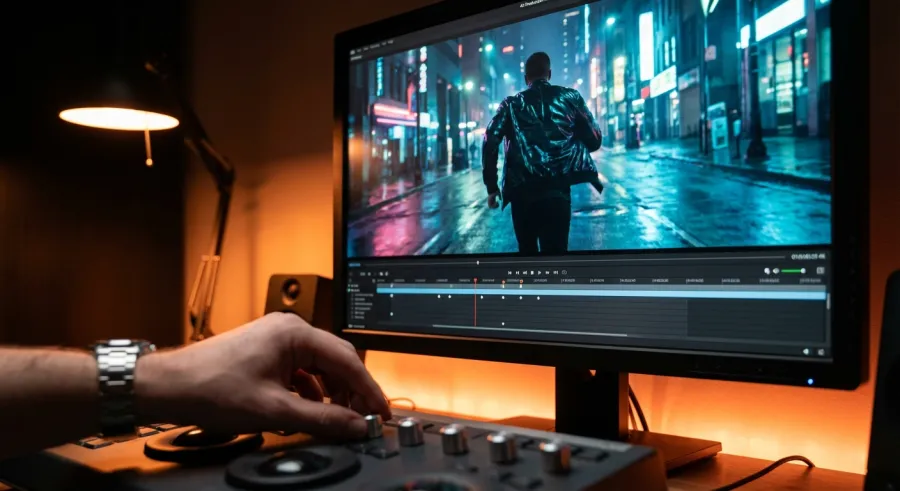
We are also seeing the emergence of "nodes" specifically for WAN 2.5 in software like ComfyUI. These nodes allow for granular control over every aspect of the WAN 2.5 generation process. This is where the technical power of WAN 2.5 meets user creativity.
The Economic Reality of Using WAN 2.5 and Other Models
Running a model as complex as WAN 2.5 requires massive computational resources. This is why the cost of inference is a major talking point for WAN 2.5 users. Whether you use a cloud provider or local hardware, WAN 2.5 has a price tag.
For many developers, the cost of accessing the WAN 2.5 API can add up quickly. This is where strategic choices in infrastructure become vital for anyone deploying WAN 2.5 at scale. Efficiency is just as important as the quality of the WAN 2.5 output.
In this high-cost environment, platforms that aggregate access to models like WAN 2.5 are becoming essential. These platforms help manage the switching costs between different AI tools. They allow creators to use WAN 2.5 when it’s the best fit for the job.
Managing the budget for a project involving WAN 2.5 requires a keen eye on API pricing. If you are generating thousands of videos with WAN 2.5, even a few cents difference matters. This economic pressure is shaping the future of the WAN 2.5 ecosystem.
Optimizing Your AI Workflow with GPT Proto and WAN 2.5
When dealing with high-performance models like WAN 2.5, cost efficiency is non-negotiable. This is where GPT Proto provides a significant advantage for developers and businesses. GPT Proto offers up to 60% off mainstream API prices, which applies to various model types.
By using GPT Proto, you can unify your access to text, image, and video models like WAN 2.5. Instead of managing multiple subscriptions, GPT Proto provides a single interface for all your needs. This simplifies the technical overhead of integrating WAN 2.5 into your app.
GPT Proto also features smart scheduling, allowing you to choose between performance-first or cost-first modes. If you need a quick draft from WAN 2.5, you can prioritize speed and savings. For final renders, GPT Proto ensures you get the highest performance possible from WAN 2.5.
The flexibility of GPT Proto means you aren't locked into a single provider for your WAN 2.5 needs. You can easily switch between models if another one surpasses WAN 2.5 in the future. This future-proofs your business in the rapidly changing world of WAN 2.5 and AI.
The Competitive Landscape Facing WAN 2.5
WAN 2.5 does not exist in a vacuum; it faces stiff competition from every direction. While many are focused on WAN 2.5, other open-weights models are gaining momentum. One of the most anticipated rivals to WAN 2.5 is the LTX-2 model.
LTX-2 is coming out with open weights very soon, which might lure away WAN 2.5 users. If LTX-2 offers similar quality with more freedom, it poses a threat to WAN 2.5. The community is notoriously fickle when it comes to WAN 2.5 or other tools.
There is also the "Kling" factor to consider when evaluating the success of WAN 2.5. Kling has already established itself as a powerful and relatively affordable alternative to WAN 2.5. The market is becoming a race to see who can provide the best WAN 2.5 alternative.
However, WAN 2.5 has the advantage of its established brand and previous community goodwill. Many people want WAN 2.5 to succeed because they liked the previous versions. This brand loyalty is a powerful asset for the WAN 2.5 development team.
Future Expectations and the Roadmap for WAN 2.5
Skepticism remains high regarding the release of a truly open-source version of WAN 2.5. Some Redditors believe that once a company goes closed-source, like the WAN 2.5 team, they don't go back. This creates a sense of "release uncertainty" surrounding the future of WAN 2.5.
Others are more optimistic about the possibility of a "distilled" or lightweight WAN 2.5. A smaller version would allow more people to use WAN 2.5 on consumer-grade GPUs. This would be a massive win for the popularity of the WAN 2.5 ecosystem.
Looking ahead, the next six months will be critical for the survival of WAN 2.5. If the developers don't release significant updates, WAN 2.5 might become a footnote. Innovation in the video space is too fast for WAN 2.5 to stand still.
We expect to see more integrations of WAN 2.5 into creative software like Premiere or Resolve. If WAN 2.5 can become a plugin, its utility will skyrocket for professional editors. This is the natural evolution for a tool with the power of WAN 2.5.
Practical Use Cases: How to Leverage WAN 2.5 Today
If you are a marketer, WAN 2.5 can revolutionize how you create social media content. Instead of expensive stock footage, you can use WAN 2.5 to generate specific b-roll. This allows for a much more cohesive brand voice when using WAN 2.5 generated assets.
Educators can also find massive value in the capabilities of WAN 2.5 for visual learning. Complex concepts can be animated in seconds using a simple WAN 2.5 prompt. This makes the production of high-quality educational videos much more feasible with WAN 2.5.
The indie gaming industry is another sector where WAN 2.5 is making a significant impact. Developers can use WAN 2.5 to create cutscenes or character dialogues without a massive budget. WAN 2.5 effectively democratizes high-end animation for small studios.
Finally, personal creators are using WAN 2.5 to explore new forms of digital storytelling. The ability to turn a thought into a 1080P video with WAN 2.5 is empowering. We are seeing the birth of "AI-first" directors who specialize in prompting WAN 2.5.
Maximizing Results with Your WAN 2.5 Prompts
Getting the most out of WAN 2.5 requires a different mindset than traditional video editing. You have to learn the specific "language" that the WAN 2.5 engine understands best. Detailed descriptions of lighting and camera movement are key to WAN 2.5 success.
The secret to mastering WAN 2.5 lies in the balance between technical precision and creative vision. If you treat WAN 2.5 like a collaborator rather than just a tool, the results will be far superior.
One tip for WAN 2.5 users is to use "negative prompts" to filter out unwanted artifacts. This helps clean up the visual noise that can sometimes appear in a WAN 2.5 render. Refinement is a necessary step in any professional WAN 2.5 workflow.
Also, don't be afraid to combine WAN 2.5 with other AI tools for better results. You might generate a background in Midjourney and then animate it using WAN 2.5. This multi-tool approach is currently the gold standard for high-quality WAN 2.5 projects.
As you experiment, keep a log of which settings in WAN 2.5 produce the best motion. Every model has "sweet spots," and finding them in WAN 2.5 will save you hours of time. Mastery of WAN 2.5 is a journey of constant trial and error.
Conclusion: The Lasting Impact of WAN 2.5
In summary, WAN 2.5 is a complex and polarizing figure in the current AI landscape. It offers promising features like 1080P resolution and realistic audio-visual synchronization. However, the closed-source nature of WAN 2.5 has divided the community.
Whether WAN 2.5 becomes the industry standard or a niche tool remains to be seen. Its success depends on how the developers handle the pressure from open-source rivals to WAN 2.5. User feedback will be the ultimate decider for the fate of WAN 2.5.
For creators, the message is clear: WAN 2.5 is a tool worth exploring for its affordability. While it may not replace Hollywood studios yet, WAN 2.5 is a powerful ally for prosumers. The era of accessible AI video is here, led by WAN 2.5.
As we look forward to the next version, the lessons learned from WAN 2.5 will be vital. The balance between profit and community will define the next chapter of WAN 2.5. For now, we can all enjoy the creative possibilities that WAN 2.5 has unlocked.
Original Article by GPT Proto
"We focus on discussing real problems with tech entrepreneurs, enabling some to enter the GenAI era first."