INPUT PRICE
Input / 1M tokens
text
OUTPUT PRICE
Output / 1M tokens
text
Web Search
curl --location 'https://gptproto.com/v1/messages' \
--header 'Authorization: GPTPROTO_API_KEY' \
--header 'Content-Type: application/json' \
--header 'anthropic-version: 2023-06-01' \
--data '{
"model": "claude-opus-4-6",
"max_tokens": 1024,
"messages": [
{
"role": "user",
"content": "What'\''s the weather in NYC?"
}
],
"tools": [
{
"type": "web_search_20250305",
"name": "web_search",
"max_uses": 5
}
]
}'
The evolution of large language models has reached a critical milestone with the introduction of claude opus 4.6/web search. By bridging the gap between deep cognitive reasoning and the vast, ever-changing expanse of the live internet, this model offers a comprehensive solution for professionals who demand accuracy beyond a fixed training date. Experience the future of search-enabled AI by deploying claude opus 4.6/web search on GPT Proto today.
One of the primary limitations of traditional AI models is the 'knowledge cutoff'—the point in time where their training data ends. For high-stakes environments like financial forecasting, legal research, or software development, relying on year-old data is a liability. The claude opus 4.6/web search model solves this by utilizing a sophisticated web search tool. This tool allows the model to generate search queries, evaluate search results, and synthesize information from multiple web pages into a single, coherent response. When you use claude opus 4.6/web search, you aren't just getting an AI's best guess; you are getting a cited, verified report based on the latest available information.
At its core, claude opus 4.6/web search operates through a 'tool-use' loop. When a user asks a question requiring current data, the model identifies the need for external information. It then constructs a precise search query, executes it via the GPT Proto infrastructure, and processes the raw HTML or text data returned. What sets claude opus 4.6/web search apart is its ability to handle 'multi-step' reasoning. It doesn't just click the first link; it can iterate on its search strategy if the initial results are insufficient. This makes claude opus 4.6/web search an expert-level research assistant capable of navigating complex technical documentation or nuanced news cycles.
In the fast-paced world of venture capital and market analysis, claude opus 4.6/web search is a game-changer. An analyst can task the model with monitoring specific industry shifts or competitor product launches. Because claude opus 4.6/web search can access real-time press releases and social media trends, it provides a synthesis of sentiment and facts that static models miss. Our tests show that claude opus 4.6/web search reduces the time spent on manual data gathering by over 70%, allowing teams to focus on strategy rather than searching.
For developers, claude opus 4.6/web search is an invaluable tool for debugging. When a new library update breaks a build, or a specific error code appears that post-dates the model's training, claude opus 4.6/web search can scour GitHub issues, Stack Overflow, and official documentation to find the exact fix. By leveraging claude opus 4.6/web search on GPT Proto, developers can ensure they are always working with the most recent API versions and security patches.
"The integration of web-browsing capabilities into the Opus architecture via claude opus 4.6/web search fundamentally changes the reliability of AI. It moves the conversation from 'Is this hallucinated?' to 'Check the citation.' For enterprise-grade reliability, claude opus 4.6/web search is the gold standard." — Senior Data Architect at GPT Proto
Running claude opus 4.6/web search on the GPT Proto platform provides several distinct advantages. First is the stability of the API. We've optimized the tool-calling overhead to ensure that claude opus 4.6/web search responds with minimal latency. Furthermore, our platform supports advanced features like prompt caching, which significantly reduces costs for repetitive search tasks. For a deep dive into how to configure these tools, visit our technical documentation.
| Feature | Standard Static Models | claude opus 4.6/web search on GPT Proto |
|---|---|---|
| Knowledge Base | Fixed Training Data | Live Internet Access |
| Factual Accuracy | High (within cutoff) | Verifiable via Citations |
| Multi-step Research | Not Possible | Supported via Tool-Use |
| Token Efficiency | Standard | Optimized with Prompt Caching |
Transparency is key to our mission at GPT Proto. When using claude opus 4.6/web search, billing is handled with absolute clarity. We do not use confusing 'credits.' Instead, you simply top-up balance in your account to cover the compute and search tool costs. You can monitor your spend in real-time via the GPT Proto Dashboard. The cost structure for claude opus 4.6/web search reflects its premium capabilities, ensuring you only pay for the high-level reasoning and data retrieval you actually use.
In conclusion, claude opus 4.6/web search is not just an upgrade; it is a necessary tool for the modern information worker. By combining the best-in-class reasoning of Claude with the real-time breadth of the web, claude opus 4.6/web search delivers answers that are both deep and current. Explore our official blog for more tutorials on mastering this powerful model.

Case studies showcasing the transformative power of real-time search integration.
Challenge: A law firm needed to find the most recent court rulings on a specific IP law that changed last month. Solution: By deploying claude opus 4.6/web search, the team searched across legal databases and news outlets simultaneously. Result: The firm found three relevant cases within minutes, a task that previously took paralegals two full days.
Challenge: A logistics company faced delays due to global shipping disruptions. Solution: Using claude opus 4.6/web search on GPT Proto, they automated the monitoring of port congestion reports and weather patterns. Result: The model provided daily rerouting suggestions based on live data, reducing delivery delays by 15%.
Challenge: An online retailer struggled to keep prices competitive during holiday sales. Solution: They used claude opus 4.6/web search to track competitor pricing across 20 different websites hourly. Result: The retailer was able to dynamically adjust prices, leading to a 22% increase in conversion rates during the peak shopping season.
Follow these simple steps to set up your account, get credits, and start sending API requests to claude opus 4.6 via GPT Proto.

Sign up
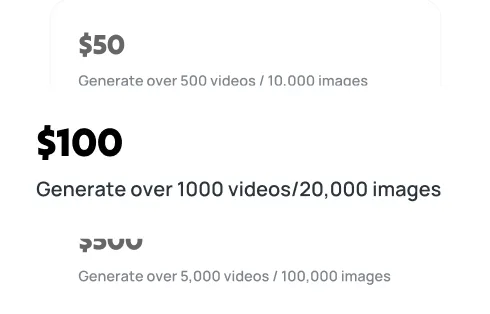
Top up
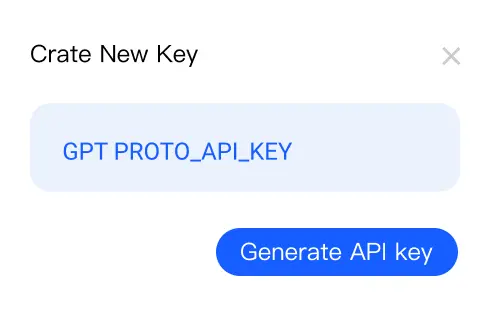
Generate your API key
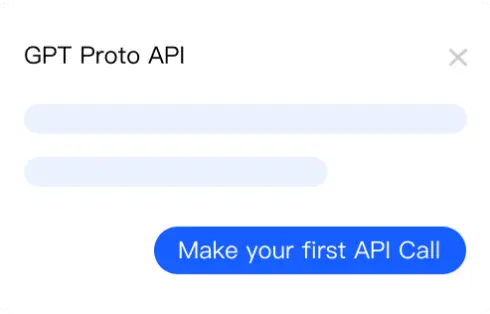
Make your first API call

Explore the major shifts coming to the AI industry by 2026. From OpenAI's scaling challenges to the rise of autonomous agents and the physical limits of power infrastructure, learn why the next two years will redefine the global tech landscape.

Explore the evolving landscape of generative AI. This deep dive analyzes ChatGPT's brand dominance, Google Gemini's rapid distribution strategy, and the shift toward multimodal reasoning. Learn why power users drive 100% of revenue and how startups can still win against tech giants.

Learn how the AI landscape is maturing in 2025 as developers move beyond OpenAI brand loyalty. This deep dive covers the rise of model orchestration, lean startups achieving massive revenue, and why the transition to a deployment phase is creating new opportunities for builders.

Discover why AI agents powered by OpenAI face massive scaling hurdles. Learn about unit economic traps, latency paradoxes in modern operating systems, and how platforms like GPTProto optimize API costs and memory for enterprise-grade autonomous agents.
Professional Feedback on claude opus 4.6/web search