GPT Proto
claude-sonnet-4-20250514-thinking / file-analysis
Claude Sonnet 4 represents a significant evolution in AI reasoning and context management. Based on extensive user data and technical benchmarks, Claude Sonnet 4 excels in complex coding environments and long-context analysis, though it introduces specific stylistic nuances such as an increased use of punctuation. At GPTProto.com, we provide high-speed API access to Claude Sonnet 4, allowing developers to bypass traditional credit-based limitations. Whether you are building automated coding agents or sophisticated financial analysis tools, Claude Sonnet 4 offers a unique balance of speed and depth, outperforming many competitors in reasoning-heavy tasks while requiring specific prompting techniques for optimal instruction following.

INPUT PRICE

$ 2.1
30% off
$ 3

Input / 1M tokens

file

OUTPUT PRICE

$ 10.5
30% off
$ 15

Output / 1M tokens

text

Claude Sonnet 4: Advanced Reasoning and API Performance Deep Dive

The launch of Claude Sonnet 4 has stirred the AI developer community, sparking intense debate over its coding prowess and creative writing style. At GPTProto.com, we make it easy to explore all available AI models, including this latest iteration, without worrying about restrictive daily limits or complicated billing structures.

Claude Sonnet 4 is designed for users who need deep reasoning capabilities paired with efficient processing. While earlier versions like Sonnet 3.7 were celebrated for a certain quiet competence and mature prose, Claude Sonnet 4 pushes the boundaries of technical problem-solving. This ai model isn't just a slight upgrade; it’s a shift in how the api handles long-context instructions and multi-step reasoning. However, users should be prepared for a model that has developed its own personality, complete with technical quirks and specific stylistic habits.

Claude Sonnet 4 Coding Performance: Why Developers are Divided

When it comes to software engineering, Claude Sonnet 4 has become a polarizing tool. Some developers swear by its ability to handle complex refactors, noting that Claude Code is currently a top-tier choice for terminal-based AI assistance. These users report that the api can reason through entire directory structures with impressive clarity. On the other hand, a vocal segment of the community feels that Claude Sonnet 4 takes too many shortcuts. It’s not uncommon for the model to omit sections of code or replace requested logic with ellipses, especially during long sessions.

"While Claude Sonnet 4 demonstrates high technical ceilings, its tendency to take shortcuts requires a more structured approach to prompting compared to previous versions."

To get the most out of the Claude Sonnet 4 api for coding, we recommend a modular approach. Instead of asking for a massive feature set in one go, break your requests into atomic, verifiable steps. This keeps the ai focused and prevents it from 'glossing over' critical requirements. You can monitor your API usage in real time to see how these iterative calls impact your development speed and efficiency.

Navigating the Writing Style and Prose Quality of Claude Sonnet 4

One of the most surprising shifts in Claude Sonnet 4 is its prose style. While its predecessors were known for flowing, natural sentences, Claude Sonnet 4 has picked up some identifiable habits that some critics argue make it feel more AI-written. Specifically, it has a notable fondness for em-dashes and colons. This can result in text that feels fragmented or overly structured. For creative writers, this shift means that Claude Sonnet 4 might require more steering through custom instructions.

If you find the writing style too repetitive, you can use the system prompt to restrict specific punctuation or stylistic choices. Many users have successfully instructed Claude Sonnet 4 to avoid em-dashes entirely, resulting in much cleaner output. If you're looking for technical guides on how to tune these parameters, you can learn more on the GPTProto tech blog where we cover advanced prompting strategies for this specific ai model.

What Makes Claude Sonnet 4 Different From Its Predecessors?

The differences between Claude Sonnet 4 and earlier models like 3.7 or the Opus series are significant. While Opus remains the heavy hitter for pure creative nuance, Claude Sonnet 4 often matches it in technical reasoning tasks. However, it is more concise—sometimes to a fault. Some users complain that the model gives 'Haiku-style' short responses when a more detailed explanation was expected. This makes it incredibly fast, but potentially less ideal for roleplaying or long-form storytelling without heavy prompting.

FeatureClaude Sonnet 4Claude Sonnet 3.7Standard GPT Models
Reasoning DepthVery HighHighHigh
Prose FlowStructured (Heavy Punctuation)Natural / FluidVariable
Coding ReliabilityMixed (High Potential)High / StableGood
Context MemoryExcellentGoodVariable

How to Improve Claude Sonnet 4 Instruction Following with Task Breakdowns

A common complaint with the Claude Sonnet 4 api involves instruction drift. During five or six consecutive prompts, the model might start changing requirements or ignoring earlier constraints. This isn't necessarily a lack of intelligence, but a byproduct of how it prioritizes tokens in a long context. The most effective fix discovered by the community is the use of explicit checkpoints. By asking the ai to verify its progress at each stage, you force the Claude Sonnet 4 engine to re-read the context window and align with your original goals.

For those managing large-scale deployments, you can manage your API billing efficiently at GPTProto, ensuring your long-context sessions aren't interrupted by credit issues. Our platform provides the stability needed to run these complex, multi-step workflows without the headache of managing multiple vendor accounts.

Claude Sonnet 4 vs GPT-5.4: Accuracy and Decisiveness in Complex Tasks

In direct comparisons with competitors like GPT-5.4, Claude Sonnet 4 shows a unique philosophical stance. In tasks involving investment theory or strategic recommendations, Claude Sonnet 4 tends to explain the 'why' rather than giving a definitive 'what.' It prefers to outline multiple perspectives rather than making a final decision. While this makes it a safer and more educational tool, users looking for a decisive recommendation might find it frustrating. Interestingly, in certain edge cases—particularly when prompted in Chinese with an empty system prompt—Claude Sonnet 4 has been known to misidentify itself as DeepSeek, a quirk that highlights the complex data mixtures used in modern ai training.

To ensure you are always using the right tool for the job, you can read the full API documentation to compare parameters across different models. Whether you need the decisiveness of a GPT model or the nuanced reasoning of Claude Sonnet 4, GPTProto provides a unified interface for all your needs. Don't forget that you can earn commissions by referring friends to our platform, helping them access Claude Sonnet 4 with the same ease and reliability you enjoy.

GPT Proto

Real-World Applications for Claude Sonnet 4

Discover how businesses are leveraging Claude Sonnet 4 to solve complex problems and improve efficiency.

Media Makers

Complex Legacy Code Refactoring

A financial firm needed to migrate a monolithic codebase to microservices. By using Claude Sonnet 4 and its high-level reasoning, they broke down the logic into atomic steps. The api accurately identified dependencies and provided a migration path that saved the team months of manual analysis, despite the model's initial tendency to omit code segments.

Code Developers

Automated Technical Documentation

A software startup used Claude Sonnet 4 to generate comprehensive API docs from raw source code. By applying custom instructions to mitigate the overuse of colons and em-dashes, they produced clear, professional prose that matched their brand voice. The model's context memory allowed it to maintain consistency across the entire documentation suite.

API Clients

Multi-Perspective Strategic Research

A consultancy firm utilized Claude Sonnet 4 to analyze competing economic theories for a client report. Unlike models that force a single recommendation, Claude Sonnet 4 provided a nuanced, multi-faceted breakdown of each theory's pros and cons. This allowed the consultants to present a more balanced and thoroughly researched view to their board.

Get API Key

Getting Started with GPT Proto — Build with claude sonnet 4.20250514 thinking in Minutes

Follow these simple steps to set up your account, get credits, and start sending API requests to claude sonnet 4.20250514 thinking via GPT Proto.
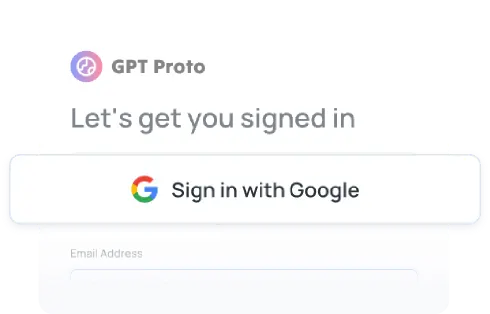
Sign up
Sign up

Create your free GPT Proto account to begin. You can set up an organization for your team at any time.

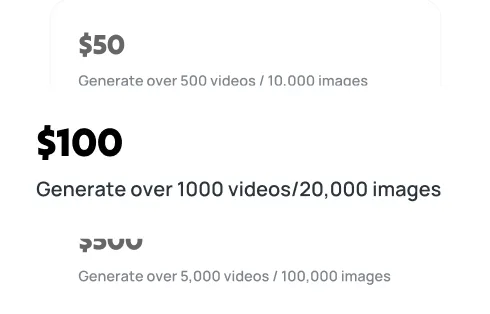
Top up

Top up

Your balance can be used across all models on the platform, including claude sonnet 4.20250514 thinking, giving you the flexibility to experiment and scale as needed.

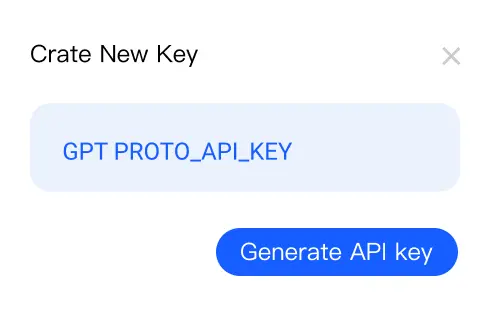
Generate your API key

Generate your API key

In your dashboard, create an API key — you'll need it to authenticate when making requests to claude sonnet 4.20250514 thinking.

Make your first API call

Make your first API call

Use your API key with our sample code to send a request to claude sonnet 4.20250514 thinking via GPT Proto and see instant AI‑powered results.

Get API Key

Frequently Asked Questions About Claude Sonnet 4

User Reviews and Expert Feedback on Claude Sonnet 4