PRICE
Per Time
INPUT
image
OUTPUT
video
Image To Video
curl --location 'https://gptproto.com/v1beta/models/veo-3.1-generate-preview:predictLongRunning' \
--header 'x-goog-api-key: GPTPROTO_API_KEY' \
--header 'Content-Type: application/json' \
--data '{
"instances": [
{
"prompt": "Generate a video of a real-life model posing for a photoshoot.",
"image": {
"mimeType": "image/png",
"bytesBase64Encoded": "BASE64_ENCODED_IMAGE"
}
}
],
"parameters": {
"aspectRatio": "9:16"
}
}'
Query Result
curl --location --globoff --request POST 'https://gptproto.com/v1beta/models/veo-3.1-generate-preview/operations/{{operation_id}}' \
--header 'x-goog-api-key: GPTPROTO_API_KEY' \
--header 'Content-Type: application/json'
If you're looking to build applications that can truly see and hear, you should browse Gemini-3-Flash-Preview and other models available today. This multi-modal powerhouse is designed to handle the heavy lifting of video processing without the need for domain-specific models.
Gemini-3-Flash-Preview isn't your typical text-only model. It’s a vision-native system that processes video by sampling frames and analyzing audio streams simultaneously. I've found that for most developers, the ability to refer to specific timestamps using the MM:SS format changes the way we think about search and retrieval. Instead of just getting a generic summary, Gemini-3-Flash-Preview lets you ask, "What happened at 05:22?" and get a concrete answer. This makes it a perfect fit for the GPTProto ecosystem where efficiency and precision are paramount.
The magic behind Gemini-3-Flash-Preview lies in its sampling method. By default, the model samples video at 1 frame per second (FPS). This is great for most content, but if you're dealing with high-speed motion, you might lose some detail. Thankfully, you can set a custom frame rate to capture those blink-and-you-miss-it moments. When you use the Gemini-3-Flash-Preview API, you have three main ways to get your data into the system: the File API, Inline Data, or YouTube URLs.
For files larger than 100MB, the File API is the way to go. It supports up to 20GB on paid tiers, allowing Gemini-3-Flash-Preview to digest massive amounts of footage. If you're just testing a quick 1-minute clip, you can send the data inline, but it's much slower for anything substantial. I suggest you read the full API documentation to see how to properly structure your multipart requests for the best results.
Gemini-3-Flash-Preview is the first model I've used that doesn't choke on long-form video content. The context caching feature is a massive cost-saver for repeated queries against the same file.
Integration is straightforward. You upload your file, wait for processing, and then pass the URI to the model. One thing to keep in mind is tokenization. Gemini-3-Flash-Preview calculates tokens based on the duration and resolution. At default settings, it consumes about 300 tokens per second. If you're on a budget, you can toggle the media resolution to low, which drops that to about 100 tokens per second. This flexibility is why so many developers are moving their workloads to the Gemini-3-Flash-Preview engine.
When you use the GPTProto dashboard, you can track your Gemini-3-Flash-Preview API calls in real time. This is helpful when you're experimenting with different FPS settings or clipping intervals. You can actually tell Gemini-3-Flash-Preview to only look at a specific segment of a video by setting offsets, which saves both time and money. It's these kinds of granular controls that make the Gemini-3-Flash-Preview API feel like a professional tool rather than a toy.
While previous models were capable, Gemini-3-Flash-Preview introduces the media_resolution parameter, which allows for much finer control over how frames are processed. This means if you need to read small text in a video, you can crank up the resolution. Plus, Gemini-3-Flash-Preview supports up to 10 videos per request in the latest versions, whereas older models often limited you to just one. This multi-video support is huge for comparison tasks or security footage analysis.
| Feature | Gemini-3-Flash-Preview on GPTProto | Standard Alternative Models |
|---|---|---|
| Max File Size | 20GB (File API) | Usually < 500MB | Context Window | Up to 1M Tokens | 128k - 200k | Video Sampling | Custom FPS (Default 1) | Fixed Sampling | Billing Model | Pay-as-you-go / No Credits | Fixed Subscriptions |
The "No Credits" philosophy at GPTProto means you only pay for what you use. You can manage your API billing and top up your account whenever you need, ensuring your Gemini-3-Flash-Preview projects never hit an artificial wall. This is especially important for video tasks because processing tokens can add up quickly if you aren't careful.
If your video is longer than 10 minutes, you definitely want to use context caching. Processing a long video once and then asking ten different questions is much more efficient than re-sending the whole video ten times. Gemini-3-Flash-Preview stores those tokens, so subsequent requests are nearly instantaneous. This is a game-changer for building AI tutors or research tools that analyze hours of footage. For more tips on this, learn more on the GPTProto tech blog where we deep-dive into caching strategies.
I also recommend placing your text prompt *after* the video data in your request array. For some reason, Gemini-3-Flash-Preview seems to follow instructions better when it has the visual context first. Whether you're using Python, Node.js, or Go, the logic remains the same: upload, process, and then prompt. Keep an eye on the latest AI industry updates to see when new format support or sampling improvements are added to the Gemini-3-Flash-Preview ecosystem.

How businesses are using Gemini-3-Flash-Preview to solve complex video processing challenges.
Challenge: A university needed to generate quizzes from thousands of hours of lecture recordings. Solution: They implemented Gemini-3-Flash-Preview to analyze video frames and audio to extract key concepts. Result: The system now generates accurate 10-question quizzes with answer keys in under two minutes using Gemini-3-Flash-Preview.
Challenge: A retail chain spent hours manually reviewing footage for loss prevention. Solution: They used the Gemini-3-Flash-Preview API to index footage with descriptive tags and searchable timestamps. Result: Security teams can now search for specific events like 'blue shirt at register' and find results instantly via Gemini-3-Flash-Preview.
Challenge: A media company needed to summarize long-form documentaries for social media snippets. Solution: They utilized Gemini-3-Flash-Preview's clipping intervals to identify the most engaging segments. Result: Social media engagement increased by 40% because Gemini-3-Flash-Preview correctly identified 'salient moments' for highlight reels.
Follow these simple steps to set up your account, get credits, and start sending API requests to veo 3.1 generate preview via GPT Proto.
Sign up
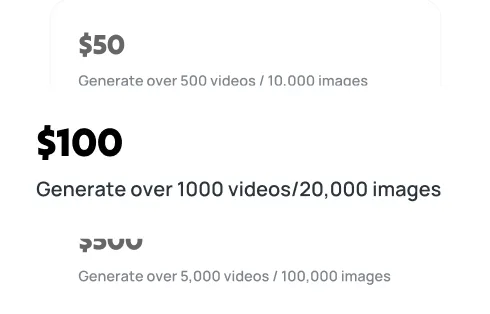
Top up
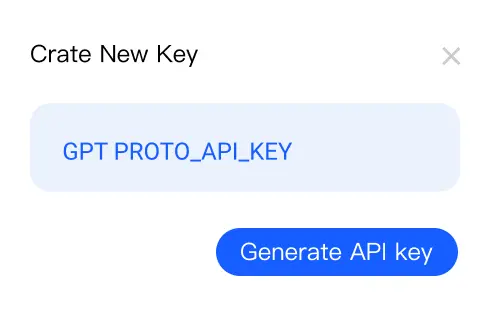
Generate your API key
Make your first API call

Google built veo 3.1 lite to churn out cheap, high-volume video at scale rather than win Oscars. See if this utility model fits your production needs.

Explore Veo 3.1 for high-quality 4K AI video. Learn about the API, scene extension, and how to optimize costs for your projects. Get started today.
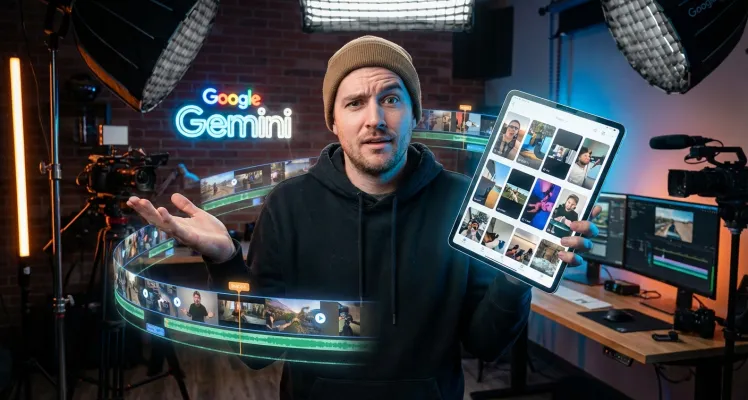
The gemini veo 3 limits you to 720p and 8-second clips, but its character consistency is unmatched. Learn how to optimize your storyboarding workflow now.

Google's video generator bridges the gap between weird artifacts and usable footage. Learn how to master veo3 ai prompts and scale your production.
Developer Reviews for Gemini-3-Flash-Preview