GPT Proto
gpt-4o-mini-2024-07-18
GPT-5.2 introduces a major shift in AI interaction through the Responses API, replacing the legacy Chat Completions model. This new primitive offers a 3% intelligence boost in SWE-bench tests and improves cache utilization by up to 80%, significantly cutting costs for high-volume developers. With native support for agentic tools like web search, file retrieval, and code interpretation, GPT-5.2 moves beyond simple message exchanges into a stateful, unified framework. This guide explores how to utilize GPT-5.2 to build faster, smarter, and more efficient AI applications using the latest industry standards.

INPUT PRICE

$ 0.105
30% off
$ 0.15

Input / 1M tokens

text

OUTPUT PRICE

$ 0.42
30% off
$ 0.6

Output / 1M tokens

text

GPT-5.2 API: Performance, Pricing, and Integration Guide

If you're building next-gen applications, the switch to the GPT-5.2 Responses API isn't just an update—it's a fundamental shift in how your code interacts with intelligence. You can explore all available AI models to see how this version compares to legacy systems.

GPT-5.2 Performance Gains in the New Responses Framework

The numbers don't lie. Moving your workloads to GPT-5.2 via the Responses API provides a measurable boost in reasoning. In recent SWE-bench evaluations, GPT-5.2 showed a 3% improvement over previous iterations when using the exact same prompt and environment. This isn't just about speed; it's about the model's ability to handle complex, multi-step engineering tasks without losing the thread. Unlike Chat Completions, the Responses API is designed as an agentic loop. It allows GPT-5.2 to call multiple tools—like web search, image generation, and remote MCP servers—within a single request cycle. This architecture minimizes the back-and-forth logic you previously had to manage in your own application code.

The transition from Chat Completions to the Responses API marks the end of stateless, message-heavy integrations. GPT-5.2 is built for stateful, tool-rich environments where the model acts more like an operator than a simple text generator.

Why Developers Are Switching to GPT-5.2 for Production APIs

Efficiency is the biggest driver for the GPT-5.2 migration. Internal testing reveals that GPT-5.2 achieves between 40% and 80% better cache utilization compared to Chat Completions. For teams running high-volume production traffic, this results in dramatic cost reductions. You can manage your API billing and see these savings reflected in your pay-as-you-go usage. The API achieves this by maintaining state from turn to turn when you use the store: true parameter. Instead of sending the entire conversation history back to the model every time, GPT-5.2 preserves the reasoning and tool context internally, which speeds up response times and lowers token consumption.

What Makes GPT-5.2 Different From Chat Completions?

The primary difference lies in the shift from 'Messages' to 'Items'. While Chat Completions relied on a rigid array of roles, GPT-5.2 uses Items—a union of types that includes function calls, outputs, and reasoning summaries. This structure better represents the basic unit of model context. When you read the full API documentation, you'll notice that the n parameter is gone; GPT-5.2 focuses on a single, high-quality generation per call to ensure reliability.

CapabilityChat CompletionsGPT-5.2 Responses
Text GenerationYesYes
Native Web SearchNoYes
Intelligence (SWE-bench)Baseline+3% Improvement
Cache EfficiencyStandard40-80% Better
Context ManagementManualStateful (Stored)

How to Get the Best Results From GPT-5.2's API

To maximize the potential of GPT-5.2, you should move away from managing state manually. By passing a previous_response_id, you can chain interactions together, creating a fork in the history or building upon complex reasoning chains without redundant data transfers. It’s also wise to monitor your API usage in real time to identify which tool calls are consuming the most resources. For organizations with strict Zero Data Retention (ZDR) requirements, GPT-5.2 offers encrypted reasoning items. This allows you to stay stateless while still benefiting from advanced reasoning tokens that are decrypted only in-memory during the request cycle. This ensures that no intermediate state is ever persisted on disk, meeting high-level compliance needs.

GPT-5.2 vs Legacy Models: Speed, Cost, and Accuracy

If you're still using legacy endpoints, you're likely paying for tokens that could be cached. GPT-5.2 handles Structured Outputs differently too; instead of response_format, you now use text.format. This change simplifies the schema and makes it harder for the model to hallucinate invalid JSON. Following the official OpenAI migration path is the best way to ensure your integration remains future-proof. You can also try GPTProto intelligent AI agents to see how these native tools perform in real-world scenarios before you commit to a full codebase refactor. The Responses API isn't just a new endpoint; it's a superior primitive for anyone serious about AI-native engineering.

Scaling Your Integration With GPTProto

When you're ready to scale, GPT-5.2 provides the stability needed for enterprise-grade apps. You can learn more on the GPTProto tech blog about how to optimize your prompts for the new Items-based architecture. Bottom line: the GPT-5.2 Responses API is faster, cheaper, and smarter. If you haven't started your migration, you're leaving performance on the table. Start by updating your generation endpoints from /v1/chat/completions to /v1/responses today to start saving on overhead.

GPT Proto

GPT-5.2 Real-World Applications

How top teams are utilizing GPT-5.2 to solve complex business challenges.

Media Makers

Autonomous Engineering Agents

Challenge: Software teams struggled with AI losing context during long refactoring sessions. Solution: By implementing GPT-5.2 using the Responses API, the team utilized stateful context and Items to maintain a deep understanding of the codebase. Result: A 3% increase in successful pull request generations and a 40% reduction in token overhead.

Code Developers

Real-Time Market Research Bots

Challenge: Analysts needed up-to-the-minute data without manual searching. Solution: They deployed GPT-5.2 with the native web_search tool, allowing the model to browse and synthesize news in one request. Result: Market reports that were previously hours of work are now generated in seconds with higher factual accuracy.

API Clients

Enterprise Support Automation

Challenge: High volume support tickets required consistent, multi-turn reasoning across different agents. Solution: The company switched to GPT-5.2, leveraging previous_response_id to link customer history across sessions. Result: Customer satisfaction scores rose by 15% due to more coherent and personalized problem-solving.

Get API Key

Getting Started with GPT Proto — Build with gpt 4o mini 2024.07.18 in Minutes

Follow these simple steps to set up your account, get credits, and start sending API requests to gpt 4o mini 2024.07.18 via GPT Proto.

Sign up
Sign up

Create your free GPT Proto account to begin. You can set up an organization for your team at any time.

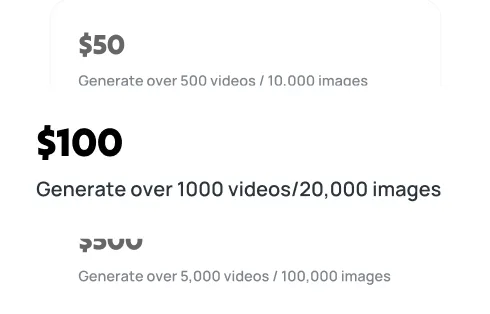
Top up

Top up

Your balance can be used across all models on the platform, including gpt 4o mini 2024.07.18, giving you the flexibility to experiment and scale as needed.

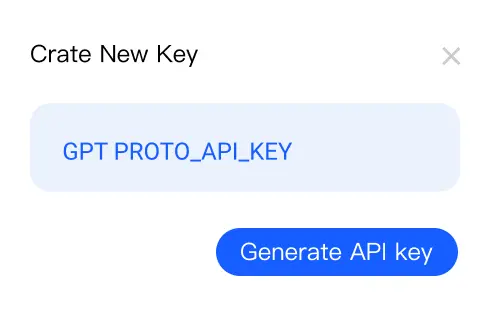
Generate your API key

Generate your API key

In your dashboard, create an API key — you'll need it to authenticate when making requests to gpt 4o mini 2024.07.18.

Make your first API call

Make your first API call

Use your API key with our sample code to send a request to gpt 4o mini 2024.07.18 via GPT Proto and see instant AI‑powered results.

Get API Key

GPT-5.2 Responses API FAQ

Developer Feedback on GPT-5.2