INPUT PRICE
Input / 1M tokens
file
OUTPUT PRICE
Output / 1M tokens
text
If you've ever tried to build a custom RAG system, you know the pain of managing embeddings and vector databases. The browse OpenAI and other models section shows how far we've come. OpenAI now provides a hosted file search tool that handles the heavy lifting of document retrieval, making it easier than ever to give your AI access to private knowledge bases.
The OpenAI file search tool is a native feature within the Responses API. It allows models to search your uploaded files for relevant information before generating a text response. This isn't just a simple keyword search; it uses semantic search technology to understand the intent behind a user's query. When the OpenAI model processes a prompt, it decides whether to call the file search tool based on the available vector stores you've linked to the request.
Building with OpenAI means you don't have to write custom code for chunking documents or managing embedding vectors. Everything is hosted. You simply upload your files to the File API, create a vector store, and add the files to that store. The system automatically indexes the content. Once indexed, the OpenAI model can pull facts directly from your documents, providing clear annotations and citations so you can verify exactly where the information came from. This level of transparency is vital for enterprise applications where accuracy is non-negotiable.
The managed nature of OpenAI search tools removes the infrastructure barrier for developers who need reliable document retrieval without the overhead of a dedicated DevOps team.
A vector store is essentially a specialized database that stores your information as high-dimensional vectors. When a user asks a question, OpenAI converts that question into a vector and finds the most similar chunks of text in your store. This is why OpenAI outperforms traditional search methods—it understands synonyms and context. If you want to get started with the OpenAI API, understanding how to group your files into logical vector stores is the first step toward high-quality outputs.
You can even customize how many results the OpenAI model looks at. By adjusting the max_num_results parameter, you control the balance between token usage and answer depth. Fewer results mean lower latency and cost, while more results provide the OpenAI model with a broader context. For those interested in the latest developments, the OpenAI file search tool documentation offers deep technical insights into these configurations. This flexibility allows you to tune your app for everything from quick customer support bots to deep research tools.
Integrating your data follows a clean three-step workflow. First, you upload your files using the OpenAI Files API. Second, you create a vector store. Third, you link those files to the vector store. This process ensures that the OpenAI indexing engine can prepare your data for high-speed retrieval. Once the status of your file reaches 'completed', it is ready for live queries.
Developers using GPTProto benefit from our flexible pay-as-you-go pricing, which applies directly to the underlying OpenAI calls. You don't have to worry about monthly subscriptions; just top up your balance and use the OpenAI features as needed. This is particularly helpful when testing large-scale document sets where you might need to recreate vector stores multiple times to optimize your metadata filtering strategies. You can always monitor your API usage in real time through our dashboard to keep costs under control.
| Feature | OpenAI Native Search | GPTProto OpenAI Implementation |
|---|---|---|
| Vector Store Hosting | Included | Managed & Stable |
| Model Support | GPT-4o, GPT-5.2 | All major OpenAI versions |
| Pricing Model | Tiered Credits | Direct Top-up (No Credits) |
| API Latency | Standard | Optimized Routing |
| File Support | 20+ Types | Verified PDF/JSON/MD Support |
Custom RAG scripts often struggle with file parsing, especially when dealing with complex layouts in PDFs or Excel sheets. OpenAI has optimized its ingestion pipeline to handle a wide array of MIME types. Whether it's a .docx legal contract or a .py code file, the OpenAI parser extracts text efficiently. This reliability is a huge advantage over open-source alternatives that require constant tweaking of chunking sizes and overlap parameters.
Another reason to stick with OpenAI is the built-in metadata filtering. You can assign attributes to your vector store files, such as 'category' or 'department', and then tell the OpenAI API to only search within specific subsets of your data. This reduces noise and ensures the AI isn't looking at outdated blog posts when it should be reading the latest technical manual. It's a level of control that makes OpenAI suitable for multi-tenant applications where data isolation is a requirement.
To get the most out of your OpenAI integration, you should organize your files before uploading. Use clear naming conventions and consistent metadata keys. This allows the OpenAI filtering engine to work at peak efficiency. When you run a query, you can pass a filter object to the API call, instructing OpenAI to look only at files where the 'status' is 'published' or the 'year' is '2024'. This targeted approach significantly improves the relevance of the retrieved chunks.
If you encounter issues with retrieval quality, check your document formatting. While OpenAI is good at parsing, cleanly structured Markdown or plain text files always yield better results than scanned images of text. For more tips on optimization, check out the learn more on the GPTProto tech blog. We regularly post guides on how to structure your data for the OpenAI API to ensure you aren't wasting tokens on irrelevant information. By following these best practices, your OpenAI powered agents will provide faster, more accurate, and more useful responses to your end users.

Discover how businesses are solving complex data challenges using OpenAI search tools.
Challenge: A law firm needed to search through thousands of historical contracts for specific clause variations. Solution: They uploaded their archive to an OpenAI vector store and used semantic search to find similar language across different file types. Result: Review time decreased by 70%, and the firm identified potential liabilities that manual reviews had missed.
Challenge: A software company struggled with users not finding answers in their complex 500-page manual. Solution: They integrated the OpenAI file search tool into their help center, allowing users to ask questions in natural language. Result: Ticket volume dropped significantly as the OpenAI model provided direct answers with citations to the exact page of the manual.
Challenge: An international corporation had internal data scattered across multiple departments and languages. Solution: By creating categorized OpenAI vector stores and using metadata filtering, they built a unified search bot for employees. Result: Employees across the globe can now access company policies instantly, with the OpenAI model providing localized summaries of complex documents.
Follow these simple steps to set up your account, get credits, and start sending API requests to gpt 5.1 codex max via GPT Proto.

Sign up

Top up
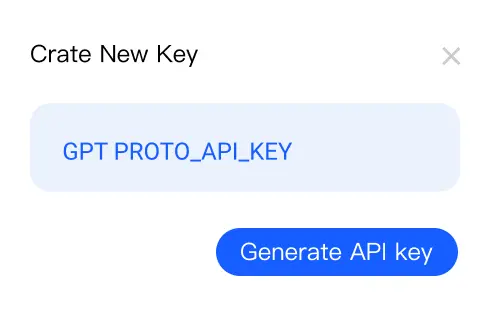
Generate your API key

Make your first API call

Explore how GPT-5.2 Thinking is redefining the digital colleague in OpenAI's latest roadmap for enterprise and infrastructure. Learn more today.

Bigger isn't always better. Discover how gpt-4o-mini delivers high-speed, cost-effective performance for daily dev tasks. Read the full breakdown now.

Tired of lazy AI? Find the perfect chatgpt alternative to boost your coding, writing, and research productivity. Compare the top models now.

GPT-5.4 is OpenAI's latest AI model, combining advanced reasoning, coding, and built-in Computer Use in one. Learn what's new, how it compares to GPT-5.2, and how to access it affordably via GPT Proto.
User Reviews & Technical Feedback