INPUT PRICE
Input / 1M tokens
text
OUTPUT PRICE
Output / 1M tokens
text
Submit Task
curl -X POST "https://gptproto.com/v1/messages" \
-H "Authorization: Bearer YOUR_API_KEY" \
-H "anthropic-version: 2023-06-01" \
-H "Content-Type: application/json" \
-d '{
"model": "claude-opus-4-1-20250805",
"max_tokens": 1024,
"messages": [
{
"role": "user",
"content": "Who are you?"
}
]
}'If you're hunting for a model that doesn't just predict text but actually understands logic, Claude Opus 4.1 is likely your best bet for high-stakes production environments.
When it comes to raw coding power, Claude Opus 4.1 has built a reputation that few other models can touch. It isn't just about writing a quick script or a single function. This AI excels at handling complex problems with multiple constraints. Developers often find that Claude Opus 4.1 connects dots that they didn't even specify in the original prompt. It sees the architectural implications of a code change across different files, making it a favorite for software engineers building full-stack applications. In fact, many users report creating four or more complete apps in a single month using this specific version because it handles the heavy lifting of logic so well.
However, that power comes with a specific personality. Claude Opus 4.1 can sometimes over-architect solutions. You might ask for a simple test file and end up with a test suite that looks like a whole separate project. It's thorough, sometimes to a fault. But if you're working on something mission-critical, you'd probably rather have a model that over-thinks the edge cases than one that ignores them entirely. You can monitor your API usage in real time as you deploy these complex coding scripts to ensure your resources are spent on the most vital logic blocks.
Where Claude Opus 4.1 genuinely shines is when you give it a complex problem with lots of constraints and it somehow connects dots you didn't even specify. It's the best coding model many veteran developers have used so far.
Logic is the cornerstone of the Claude Opus 4.1 experience. While smaller models might hallucinate a path through a logic puzzle, Claude Opus 4.1 tends to think through the steps sequentially. This reasoning ability makes it ideal for planning phases of development. Instead of just jumping into code, you can use the Claude Opus 4.1 API to map out your entire project architecture. It identifies potential bottlenecks before you've written a single line of production code. You can find more tips on this in our technical blog and tutorials.
The community has found a 'sweet spot' for using this model efficiently. Instead of using it for every minor task, they use Claude Opus 4.1 for the high-level planning and reasoning. Once the blueprint is ready, they switch to a faster model for the repetitive execution tasks. This hybrid approach allows you to get the best of both worlds: the genius-level logic of Claude Opus 4.1 and the cost efficiency of smaller alternatives. It’s a smart way to manage your API billing while still getting top-tier results.
The primary differentiator is the 'depth' of the response. A model like Claude Sonnet is fantastic for speed and bug finding, but it often lacks the multi-layered reasoning that Claude Opus 4.1 provides. When comparing models, you'll see a clear gap in how they handle complex system prompts. Claude Opus 4.1 respects detailed instructions with a level of precision that makes it feel much more like a human collaborator than a simple text generator.
| Feature | Claude Opus 4.1 | Standard Mini Models | |
|---|---|---|---|
| Logic & Reasoning | Exceptional | Moderate | |
| Coding Precision | High (Complex tasks) | Medium (Simple tasks) | |
| Over-Architecting Risk | Possible | Low | |
| Ideal Use Case | Architecture & Planning | Execution & Bug Testing | |
| GPTProto Credits | No Credits Required | No Credits Required |
As you can see, the choice depends entirely on your project's needs. For those who want to explore AI-powered image and video creation or simpler chat tasks, other models might suffice. But for heavy-duty engineering, Claude Opus 4.1 remains the king of the mountain.
Getting the most out of the Claude Opus 4.1 API requires a bit of strategy. First, you need to be mindful of token usage. Because the model is so thorough, it can be token-intensive. A single complex prompt can drain your usage quickly if you're not careful. To mitigate this, many experts suggest using detailed system prompts. You can add a directive to Claude Opus 4.1 to avoid creating unnecessary boilerplate or 'stuff out of nowhere.' This keeps the output focused and saves you money on every call.
Integration is straightforward if you follow the full API documentation. The model supports standard headers and request formats, making it easy to swap into your existing AI workflows. If you're building a system that requires high factual accuracy, keep in mind that Claude Opus 4.1 has guardrails to prevent misinformation. While these are generally helpful, they can occasionally be restrictive. It's helpful to stay updated via the latest AI industry updates to see how these safety filters are evolving over time.
In the competitive world of AI, cost is always a factor. Some users have pointed out that models like MiniMax M2.7 can deliver roughly 90% of the quality of Claude Opus 4.1 for a fraction of the cost. Specifically, a task that costs $3.67 with Claude Opus 4.1 might only cost $0.27 with a cheaper alternative. This is why the 'planning vs execution' strategy mentioned earlier is so vital. Use the expensive 'brain' (Claude Opus 4.1) for the hard stuff, and the cheaper 'muscle' for the rest.
Even with newer versions like Claude 4.5 being significantly cheaper, Claude Opus 4.1 holds its ground for specific legacy integrations and developers who have fine-tuned their prompts for this specific logic engine. While 4.1 is eventually set to be deprecated, it currently offers a level of reliability that many teams aren't ready to give up yet. If you're looking to scale your team's access, don't forget you can join the GPTProto referral program to earn commissions while sharing these advanced tools with your network. Claude Opus 4.1 is more than just a model; it's a productivity engine that has allowed developers to ship entire apps in record time.

See how Claude Opus 4.1 solves real-world engineering and business challenges.
A developer needed to launch four different applications in one month. By using Claude Opus 4.1 to handle the complex backend logic and architectural planning, they were able to bridge disparate data points quickly. Result: All four apps were deployed on schedule with minimal manual debugging.
A tech team faced a massive project with conflicting constraints. They used the Claude Opus 4.1 API to input all variables and generate a comprehensive project plan. Result: Claude Opus 4.1 identified three potential logic collisions early, saving the team weeks of wasted development time.
A legacy codebase needed a complete overhaul of its reasoning engine. The team integrated Claude Opus 4.1 to analyze the existing code and suggest a more modern, constraint-aware architecture. Result: The new code was more robust and handled edge cases that the previous manual refactor had missed.
Follow these simple steps to set up your account, get credits, and start sending API requests to claude opus 4.1 20250805 via GPT Proto.

Sign up
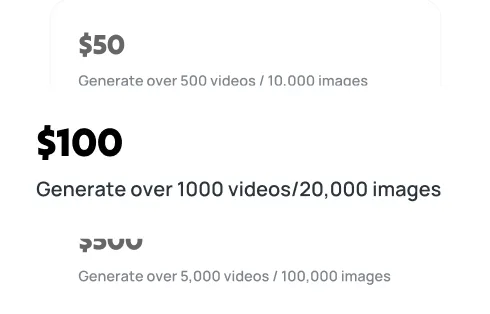
Top up
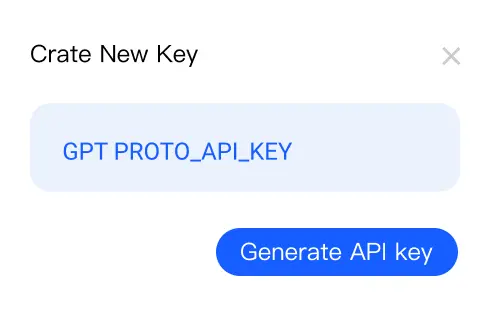
Generate your API key
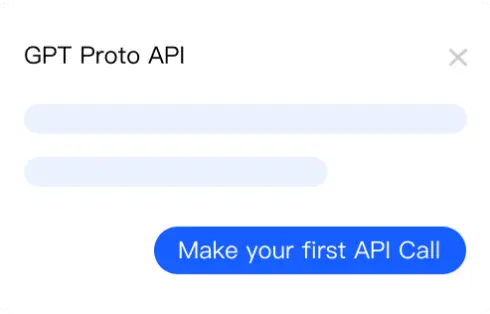
Make your first API call

Claude Sonnet 4-5 guide - features, pricing, and access via GPT Proto. Perfect for coding, research, and business task automation.

Learn how to set up the Claude 4.5 API, understand token-based pricing, choose between Opus, Sonnet, and Haiku models, and integrate Claude into your applications with step-by-step instructions and real-world examples.

Complete guide to the Anthropic API, including Claude 4.5 models, current pricing, how to obtain an API key, cost optimization strategies, and seamless integration with unified API platforms.

Learn how to use Claude Code step by step, from installation to writing your first prompt. Discover how GPT Proto makes Claude API access faster, cheaper, and more reliable for every developer.
Developer Feedback on Claude Opus 4.1