GPT Proto
gpt-4.1-mini / file-analysis
OpenAI provides the world's most sophisticated infrastructure for semantic file search and knowledge retrieval. By utilizing the OpenAI API, developers can create vast vector stores that allow models like GPT-5.2 to search through private documents, including PDFs, JSON, and Markdown files. This system doesn't just find text; it understands context, providing accurate citations and ranked results. GPTProto offers a stable gateway to these OpenAI features with flexible billing and high rate limits, ensuring your production agents always have the data they need to perform complex research tasks.

INPUT PRICE

$ 0.28
30% off
$ 0.4

Input / 1M tokens

file

OUTPUT PRICE

$ 1.12
30% off
$ 1.6

Output / 1M tokens

text

OpenAI API: Advanced File Search, Vector Stores, and Knowledge Retrieval

Harness the power of OpenAI to transform how your applications handle complex data and private knowledge bases.

OpenAI File Search Performance That Powers Production Apps

The latest OpenAI API release introduces a sophisticated hosted tool for file search. This isn't just a simple keyword matcher; it's a dual-engine system that combines semantic search with traditional keyword retrieval. When you use OpenAI for your knowledge base, the model doesn't just guess. It actually looks through your uploaded files, finds the exact paragraphs needed, and synthesizes an answer with clear citations. For developers, this means you can stop building complex RAG pipelines from scratch and instead use this managed OpenAI file search guide to get started in minutes.

We've found that the internal vector stores handled by OpenAI are incredibly efficient. They support a massive range of MIME types, from standard .txt and .pdf files to more specialized formats like .go, .java, and .ts for code-heavy projects. If your team is working with high-volume data, you'll appreciate that the OpenAI API allows Tier 4 and 5 users to hit up to 1,000 requests per minute, which is plenty of headroom for enterprise-grade tools.

How to Get the Best Results From the OpenAI Vector Store API

Setting up your knowledge base is a three-step process. First, you upload your files to the OpenAI storage system. Second, you create a vector store. Finally, you attach those files to that store. Once the status shows as 'completed,' your OpenAI models can access that info instantly. To keep things running smoothly, you should read the full API documentation to understand how to handle async file processing. It's often better to check the file status via a loop before triggering a response call.

A pro tip for optimizing costs is to use the max_num_results parameter. By default, OpenAI might pull more data than you need. By limiting this to 2 or 3 top results, you significantly lower token usage while keeping answer quality high. You can also track your OpenAI API calls in real time through our dashboard to see exactly how these adjustments impact your bottom line.

"The shift from manual retrieval-augmented generation to the native OpenAI file search tool has cut our development time by weeks. The accuracy of the file citations alone makes it the superior choice for legal and technical documentation." — Sarah Chen, Principal AI Architect

Why Developers Are Switching to OpenAI for Document Intelligence

The real magic happens when you combine OpenAI logic with metadata filtering. You aren't limited to searching the whole bucket of files every time. You can tag files with categories like 'blog' or 'legal_docs' and then tell the OpenAI API to only look in those specific areas. This makes your agents faster and much more relevant. Plus, with the GPTProto platform, you can manage your API billing with a simple pay-as-you-go model, avoiding the headache of complex credit systems found elsewhere.

When the model calls the file search tool, it returns a file_search_call item. This contains the queries the model generated and the citations it used. This transparency is vital for trust. Users can see exactly which PDF or document the OpenAI model is quoting. This is why many teams are moving their internal wikis and support bots over to the OpenAI ecosystem.

OpenAI vs Standard RAG: Speed, Cost, and Accuracy

Choosing the right retrieval method is critical for your app's success. Below is a comparison of how OpenAI stacks up against standard self-hosted RAG solutions.

FeatureStandard RAG (Self-Hosted)OpenAI Native File Search
Setup TimeDays/WeeksMinutes
MaintenanceHigh (DB + Embeddings)Zero (Fully Hosted)
Semantic AccuracyVariableExcellent (GPT-5.2 Optimized)
Citation SupportManual ImplementationNative Annotations
File FormatsLimited by Parser20+ Supported Formats

What Makes OpenAI Different From Earlier Retrieval Models?

Older versions of AI models struggled with long-context windows and often 'hallucinated' when they couldn't find an answer. The current OpenAI approach is different because it separates the search phase from the generation phase. The model first acts as a researcher, using its tools to find facts, and then acts as a writer. This two-step process in the OpenAI API ensures that if the info isn't in your files, the model can tell you that, rather than making things up.

If you're looking to scale, you can join the GPTProto referral program and earn commissions while helping others integrate these powerful features. We also suggest keeping an eye on our GPTProto tech blog for deep-dive tutorials on advanced vector store filtering. Whether you are building an automated customer support bot or a deep research tool, the OpenAI infrastructure provides the most reliable foundation available today. Check out the latest AI industry updates to see how other companies are utilizing these semantic tools to stay ahead of the curve.

Finally, remember that security is baked in. Your data used in the OpenAI vector stores is protected and subject to strict data residency rules. You can also explore GPTProto intelligent AI agents that come pre-configured with these search capabilities, allowing you to deploy professional-grade tools without writing a single line of backend code. The combination of OpenAI intelligence and our stable platform is the best way to bring your data to life.

GPT Proto

Real-World OpenAI Solutions

How businesses are solving data challenges using OpenAI tools.

Media Makers

Automated Legal Discovery

Challenge: A law firm needed to search thousands of discovery documents for specific evidence clauses. Solution: They used the OpenAI API to index all PDFs into a vector store. Result: The OpenAI model successfully identified key clauses and provided direct citations to the page and file name, reducing manual review time by 70%.

Code Developers

Enterprise Knowledge Assistant

Challenge: A global tech company had internal documentation spread across hundreds of Markdown and Docx files. Solution: They implemented OpenAI file search to create a unified support bot. Result: Employees can now ask complex technical questions and get answers instantly from the OpenAI knowledge base, improving internal support efficiency.

API Clients

Dynamic Customer Support

Challenge: An e-commerce brand struggled with out-of-date support bots that couldn't handle new product launches. Solution: They integrated the OpenAI vector store API to auto-sync new product manuals. Result: The OpenAI agent now provides real-time, accurate troubleshooting steps for even the newest products without needing manual retraining.

Get API Key

Getting Started with GPT Proto — Build with gpt 4.1 mini in Minutes

Follow these simple steps to set up your account, get credits, and start sending API requests to gpt 4.1 mini via GPT Proto.

Sign up

Sign up

Create your free GPT Proto account to begin. You can set up an organization for your team at any time.

Top up

Top up

Your balance can be used across all models on the platform, including gpt 4.1 mini, giving you the flexibility to experiment and scale as needed.

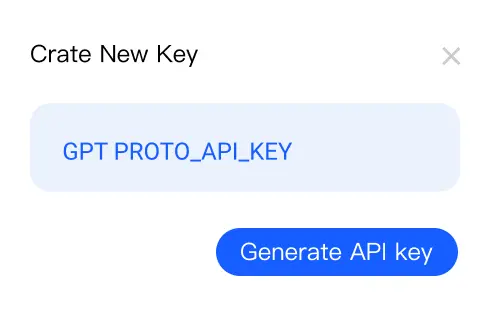
Generate your API key

Generate your API key

In your dashboard, create an API key — you'll need it to authenticate when making requests to gpt 4.1 mini.

Make your first API call

Make your first API call

Use your API key with our sample code to send a request to gpt 4.1 mini via GPT Proto and see instant AI‑powered results.

Get API Key

OpenAI API File Search FAQ

Developer Feedback on OpenAI File Search